

Could a piece of specialized equipment truly serve as a vessel for a dignified life story? When families in Belleair Bluffs begin making final arrangements, the technical term cremation retort often brings up feelings of uncertainty or even a bit of anxiety. It's completely natural to worry that the mechanical aspects of a farewell might overshadow the personal legacy of the person you love. We understand that these terms can feel cold, but the retort is actually a highly regulated environment designed to ensure the utmost safety and respect for your family member.
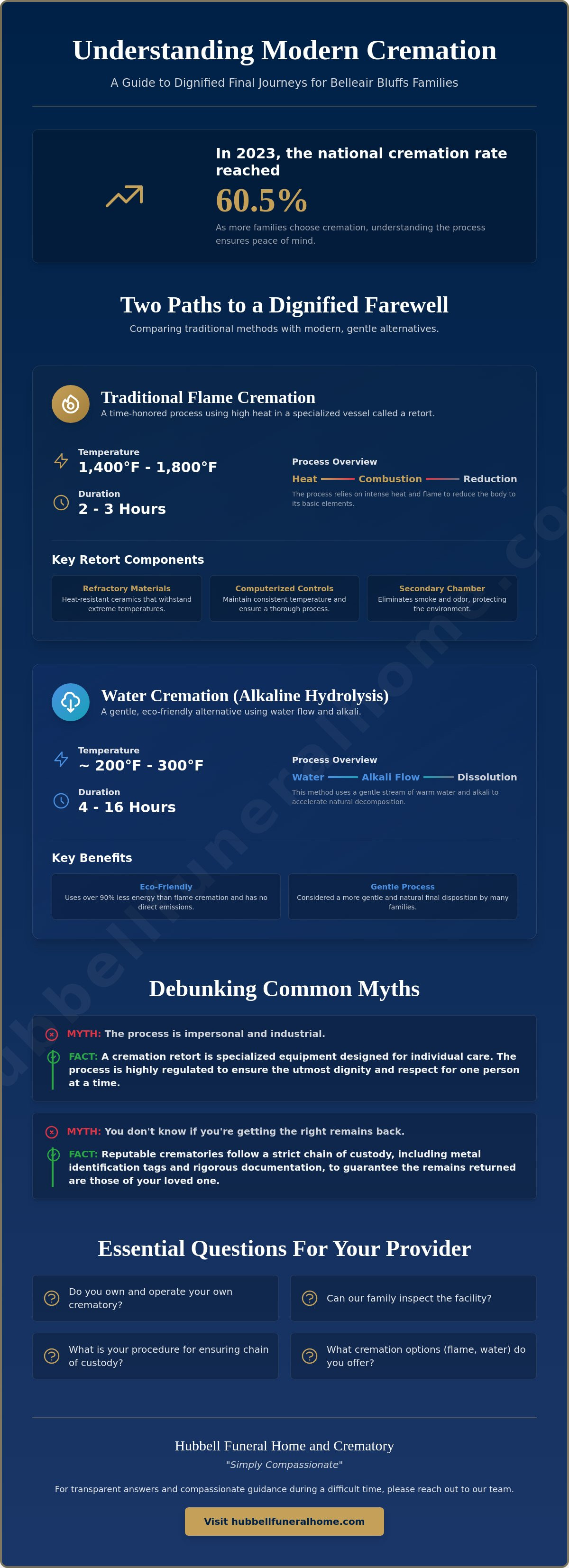
With the national cremation rate reaching 60.5 percent in 2023 according to the Cremation Association of North America, more neighbors are asking questions about the equipment used in this process. We agree that you deserve to feel completely at peace with every detail of your loved one's care. This guide will help you discover the technical and compassionate side of the cremation retort and how different technologies impact your loved one’s final journey. We'll compare traditional methods with newer, eco-friendly alternatives to ensure you feel confident in the provider you choose.
Key Takeaways
- Learn the technical and respectful role of the cremation retort, ensuring you understand the specialized environment where your loved one’s final journey begins.
- Explore the differences between traditional high-heat methods and the "gentle" alternative of water cremation to choose the path that best aligns with your family’s values.
- Debunk common industry myths and gain peace of mind by understanding how individualized care and professional standards are maintained throughout the process.
- Discover the essential questions to ask Belleair Bluffs providers to ensure your family receives the transparency and compassionate service you deserve.
What is a Cremation Retort? Defining the Vessel
When a family in Belleair Bluffs begins exploring end-of-life options, they often encounter terminology that feels clinical or unfamiliar. One such term is the retort. While the word "retort" might suggest a sharp verbal reply in common conversation, in the context of funeral service, it refers to a highly specialized, lined chamber where the cremation process occurs. Understanding What is a Cremation Retort? helps families feel more informed and at peace with the technical aspects of their loved one's final journey. This vessel is the heart of any modern crematory, designed specifically to provide a controlled environment for a dignified transition.
The distinction between industrial incinerators and a funeral retort is significant. Unlike general combustion units, these vessels are engineered with the utmost respect for the human form. They're not merely machines; they're the physical space where a life story is honored through a final, transformative act. For our neighbors in Pinellas County, knowing that this equipment is designed for individual care provides a layer of professional assurance during a difficult time.
The Purpose of the Retort in Modern Funerals
The primary goal of this equipment is the respectful reduction of remains to their basic elements. In Pinellas County, crematories must adhere to strict environmental standards, ensuring the process is clean and quiet. The design of the chamber ensures that only one individual is cared for at a time, which is a vital part of the chain of custody. This individual focus guarantees that the ashes returned to a family are, without question, those of their loved one. Modern systems use sensors to monitor the process, providing a level of precision that honors the person being remembered. It's a method that balances technical efficiency with the "simple compassion" every family deserves.
Key Components of a Standard Retort
A modern cremation vessel is a marvel of engineering, combining ancient concepts of fire with 21st-century technology. These systems are built to be reliable, safe, and environmentally conscious. The main components include:
- Refractory materials: These are specialized, heat-resistant bricks and castable ceramics. They line the inner chamber and can withstand temperatures that typically range from 1,400 to 1,800 degrees Fahrenheit.
- Computerized control systems: These systems manage airflow and fuel, keeping the temperature consistent throughout the 2 to 3-hour process. This automation removes human error and ensures a thorough reduction.
- The secondary chamber: This is an essential environmental feature. It re-burns the gases and particles from the primary chamber, effectively eliminating smoke and odors before they reach the atmosphere. This technology ensures the crematory remains a good neighbor within the Belleair Bluffs community.
By focusing on these high standards, the process remains a quiet, behind-the-scenes service that allows families to focus on celebrating life rather than worrying about logistics. The equipment acts as a steady hand, managing the minutiae of the physical process so that the emotional journey of the family can take center stage.
The Mechanics of the Traditional Flame Retort
How does the process actually work? Understanding The Mechanics of the Traditional Flame Retort helps families feel more at ease with their choice. The journey begins by placing the loved one in a dignified, combustible container. This container is then moved into the primary chamber of the retort, where intense heat facilitators the transformation. Modern facilities in Belleair Bluffs utilize advanced systems to ensure this process is completed with precision, usually taking between 90 and 120 minutes to complete a single cycle.
Safety is a cornerstone of our operations. The equipment operates at temperature ranges between 1400°F and 1800°F. To protect our staff and the local community, modern systems include a secondary chamber. This chamber acts as an afterburner, reaching temperatures of at least 1600°F to incinerate any remaining particulates or gases. This multi-stage process ensures that there is no visible smoke or odor released into the atmosphere. Our operators follow rigorous checklists that mirror the high standards of Florida state safety mandates, ensuring every step is handled with technical excellence.
Refining the Remains
What happens after the heating cycle is complete? Once the chamber has cooled, the remaining elements are carefully collected. These are not yet the fine "ashes" most people recognize; they are bone fragments that require further care. A specialized processor gently refines these fragments into a uniform, sand-like consistency. At Hubbell Funeral Home, we believe this stage is a sacred part of the "Talk of a Lifetime." Timothy David Heskin and our dedicated staff ensure that every step honors the individual. We maintain a strict chain of custody so your loved one never leaves our circle of care, providing the same dignity we would expect for our own family members.
Fuel and Energy Consumption
Traditional systems rely on natural gas or propane to maintain the necessary thermal environment. By 2026, cremation technology has reached new heights of environmental responsibility. New high-efficiency refractory linings and computerized air-to-fuel ratios reduce fuel consumption by nearly 25 percent compared to units manufactured just a decade ago. These innovations allow us to provide services that are both effective and mindful of our surroundings. Florida state regulations, managed by the Department of Environmental Protection, require regular inspections and strict emission monitoring. These standards ensure that our Belleair Bluffs neighbors can trust in a process that is as clean as it is respectful. If you have questions about these technical steps, you can learn more about our personalized approach to every service we offer.
Flame Retort vs. Water Cremation: A Technical Comparison
Families in Belleair Bluffs often ask about the differences between traditional methods and newer alternatives. While both provide a respectful path forward, the technology involved varies significantly. A standard flame-based retort uses high temperatures, typically between 1,400 and 1,800 degrees Fahrenheit, to accelerate the return of the body to its natural elements. In contrast, water cremation uses a specialized vessel to achieve a similar result through a quiet, liquid-based process. This choice often comes down to how a family wishes to honor their loved one's physical legacy.
The Science of the Water Cremation Vessel
Alkaline hydrolysis, often called water cremation, uses a solution of 95% water and 5% alkali. This combination mimics the natural decomposition that occurs over many years, but it completes the cycle in a period of 4 to 16 hours. Many local families feel drawn to this flameless retort alternative because it feels more peaceful. The process uses gentle water flow and consistent pressure to honor the physical body without the use of combustion or high-velocity air.
Environmental and Physical Differences
The environmental impact is a primary consideration for many residents in our coastal community. Flame cremation requires significant natural gas and produces carbon dioxide. When Addressing Common Misconceptions About Cremation Retorts, technical data from the 2020 National Emissions Inventory helps clarify the specific air outputs of modern facilities. Conversely, water cremation reduces energy consumption by approximately 90% and eliminates direct greenhouse gas emissions. The physical remains also differ in these ways:
- Texture: Flame-based remains are typically coarse and bone-colored, while water-based remains are fine and soft.
- Color: High heat results in a gray or charcoal hue; water cremation produces a pristine, white powder.
- Volume: Families receive about 20% more remains with water cremation because the process is gentler on the bone structure.
Which Method is Right for Your Family?
Choosing between these methods depends on your family's values and personal preferences. Traditionalists often prefer the time-honored practice of flame cremation. It's a familiar ritual that has served families for generations. Eco-conscious families might lean toward water-based technology for its smaller carbon footprint. In the Belleair Bluffs area, both options are accessible. While the initial equipment costs for water systems are often higher for providers, the final service cost for families remains comparable in most Florida funeral homes. We're here to help you weigh these details with simple compassion, ensuring the path you choose feels right for your heart and your budget.
Addressing Common Misconceptions About Cremation Retorts
Misunderstandings about the cremation process often create unnecessary anxiety for families during a difficult time. One of the most persistent myths is the idea of "mass cremation." In reality, modern equipment is built to accommodate only one person at a time. This isn't just a matter of ethics; it's a technical requirement of the machinery. Every individual is treated with the same level of care you would expect at a traditional burial service.
The term "ashes" can also be misleading. What a family receives isn't soft, gray wood ash. It consists of bone fragments that have been processed into a fine, uniform powder. This material is clean, sterile, and safe to handle. While the equipment might look industrial to an outsider, we view the retort as a vessel for a final act of service. It's a place where a life story is honored through a transformation that is both scientific and sacred.
Safety and noise are common concerns for those living near a crematory in Belleair Bluffs. Modern systems are remarkably quiet. They don't produce the smoke or odors people might associate with older technology. These units are designed to operate discreetly within the community, ensuring that the peace of our neighborhoods remains undisturbed.
The Identification Process
We use a multi-step tracking system to ensure total accuracy. A heat-resistant metal identification tag stays with your loved one throughout the entire process inside the retort. Florida Statute 497 mandates strict individual cremation procedures, and we follow these laws to the letter. Hubbell’s "Simple Compassion" approach means we treat these technical steps as a sacred trust, providing you with absolute certainty that your loved one is the only person in our care during their service.
Environmental Impact in Pinellas County
Technology has changed drastically since 1963. Back then, cremation was a simpler, less efficient process. By 2026 standards, modern systems utilize secondary combustion chambers and advanced filtration to ensure zero visible emissions. These "scrubbers" keep the air in Pinellas County clean and safe for everyone. This transition toward greener technology reflects our commitment to protecting the local environment while providing essential services to our neighbors.
Choosing a Trusted Crematory in Belleair Bluffs
Selecting a cremation provider is a significant decision that impacts your peace of mind during a difficult time. Many families in Belleair Bluffs find comfort in knowing exactly where their loved one is at all times. Choosing a facility with an on-site retort ensures a continuous chain of custody. You don't have to worry about transportation to a third-party industrial site or a facility miles away. Instead, your loved one remains in the care of the professionals you've already met and trusted.
Transparency is the foundation of our "Simple Compassion" philosophy. When interviewing a crematory, you should feel empowered to ask technical and operational questions. Consider these specific inquiries to ensure high standards of care:
- Who operates the cremation equipment, and what specific certifications do they hold?
- Is the facility open for a personal tour or inspection of the equipment?
- How does the staff ensure 100% accuracy of identification throughout the process?
- Can the family be present for a "witnessing" service at the start of the process?
For some, witnessing the start of the process provides a sense of finality and reverence. We offer retort-side services where families can gather for a final prayer, a favorite song, or a quiet moment of reflection as the process begins. This personalized approach transforms a technical procedure into a meaningful ceremony of transition, ensuring the retort is used with the dignity your loved one deserves.
The Hubbell Family Tradition
Our family has served the Belleair Bluffs community since 1963. Over these 61 years, we've learned that families value honesty and local accountability above all else. We blend modern technology with the gentle guidance you'd expect from a long-standing neighbor. Our on-site facilities allow us to maintain the highest standards of care without outsourcing to strangers. You can learn more about our cremation services near me to see how we prioritize your family's unique needs.
Next Steps in Your Planning Journey
Planning for the future is a gift you give to your survivors. By documenting your preferences now, you ensure your wishes are followed exactly. You can specify details about the cremation process or the type of memorial service you prefer through our pre-planning services. This removes the burden of making difficult technical decisions from your family during their initial period of grief.
If you have questions about the cremation process or would like a technical explanation of our equipment, we're here to help. We invite you to contact us for a tour of our facility or a quiet conversation about your options. Our goal is to provide the steady hand and humble expertise you need to navigate end-of-life care with confidence and peace.
Honoring Your Loved One with Clarity and Care
Choosing the right path for a loved one's final journey is a deeply personal decision that requires both head and heart. You've learned that the modern cremation retort is a sophisticated, highly regulated vessel designed to ensure dignity and precision throughout the process. Whether your family prefers the traditional mechanics of flame or the gentle approach of water cremation, understanding these technical differences helps replace uncertainty with peace of mind. It's about finding the method that best aligns with your values and your loved one's legacy.
Since 1963, our family has stood by our neighbors in Pinellas County to provide this very clarity. Hubbell Funeral Home remains a family-owned and operated fixture in Belleair Bluffs, specializing in both flame and water cremation services. We handle every detail with "Simply Compassionate" care, allowing you to focus on celebrating a life well-lived rather than worrying about technical arrangements. We're ready to serve as your gentle guide through these important choices.
Contact Hubbell Funeral Home for Compassionate Cremation Guidance
You don't have to navigate these decisions alone; we're here to walk beside you every step of the way.
Frequently Asked Questions
Is a retort the same thing as a furnace?
No, a retort is a specialized cremation chamber designed specifically for the respectful handling of human remains. While a standard furnace might be used for industrial purposes, a cremation retort is lined with high-density refractory bricks that can withstand extreme heat while ensuring a clean and contained process. This specialized equipment helps maintain the dignity of your loved one throughout their final journey.
Can two people be placed in a cremation retort at the same time?
No, it's illegal and unethical to cremate more than one person at a time in the same chamber. Florida Administrative Code 64V-1.001 establishes strict standards that require individual processing to ensure the integrity of the ashes you receive. Each person is cared for separately, honoring their unique life story and providing your family with absolute certainty during the grieving process.
How hot does a cremation retort get during the process?
A cremation retort typically operates at temperatures between 1,400 and 1,800 degrees Fahrenheit. These intense temperatures are necessary to complete the process efficiently and thoroughly over the course of several hours. Modern systems use automated sensors to monitor the heat constantly, ensuring the environment remains stable and follows all safety protocols required by Florida law.
What happens to jewelry or medical implants inside the retort?
Jewelry often melts due to the high heat, so we suggest families remove any sentimental items before the process begins. Medical implants like pacemakers must be removed prior to placing the body in the retort because they can explode at high temperatures. Other items like titanium hip replacements or dental gold don't combust and are carefully recovered and recycled after the process is complete.
Is it possible to witness the body being placed in the retort?
Yes, many families find comfort and closure by witnessing the start of the cremation process. We offer a peaceful viewing area where you can be present as your loved one is placed into the retort. This personalized service allows for a final goodbye and is a common request for those following specific cultural or religious traditions in Belleair Bluffs.
How long does a loved one stay inside the cremation retort?
The cremation process generally takes between 2 and 3 hours to complete inside the chamber. The exact time depends on factors like the individual's size and the type of casket or container selected for the service. After the heat cycle is finished, a cooling period of roughly 60 minutes is necessary before the remains can be prepared for the family.
Do water cremation services use a retort?
No, water cremation uses a stainless steel pressure vessel rather than a flame-based retort. This process, technically called alkaline hydrolysis, uses a mixture of 95 percent water and 5 percent alkali to accelerate natural decomposition. While the result is similar to traditional cremation, the equipment and physical science behind the two methods are completely different.
Are cremation retorts regulated in Florida?
Yes, all cremation equipment is strictly regulated by the Florida Board of Funeral, Cemetery, and Consumer Services. Under Florida Statute 497, facilities must pass regular inspections and maintain meticulous logs for every procedure performed. These state regulations ensure that every retort operates safely and follows the highest environmental standards to protect our local Belleair Bluffs community.