

You're standing in a room that suddenly feels too quiet, holding a phone and wondering about an unexpected death what to do first when the world has just shifted beneath your feet. It's completely natural to feel a sense of overwhelming shock that makes it hard to think about the next minute, let alone the next day. You want to ensure everything is handled with the utmost respect, yet the fear of missing a legal step or doing something wrong can feel like a heavy weight you shouldn't have to carry right now.
We understand that in these moments, you need a steady hand and a clear path forward. This guide provides a compassionate, step-by-step look at the first 24 hours, helping you manage the immediate logistical and legal requirements with confidence. You'll learn exactly who to contact, why the medical examiner might be involved, and how to ensure your loved one is placed in safe, respectful hands while you begin the journey of remembrance and healing.
Key Takeaways
- Learn the immediate steps to take during the first hour, including when to contact emergency services and how to secure your home or pets.
- Understand the vital role of the Florida Medical Examiner in sudden losses and how they work alongside your funeral provider to ensure respectful care.
- Follow a clear, compassionate checklist for an unexpected death what to do first so you don't have to worry about missing important legal requirements.
- Gain clarity on the essential notifications needed within the first 24 hours, from informing the next of kin to reporting the loss to Social Security.
- Discover how to gently transition from the initial crisis toward honoring a legacy through personalized life celebrations or eco-friendly water cremation.
The First Hour: Immediate Steps for a Death at Home or in Public
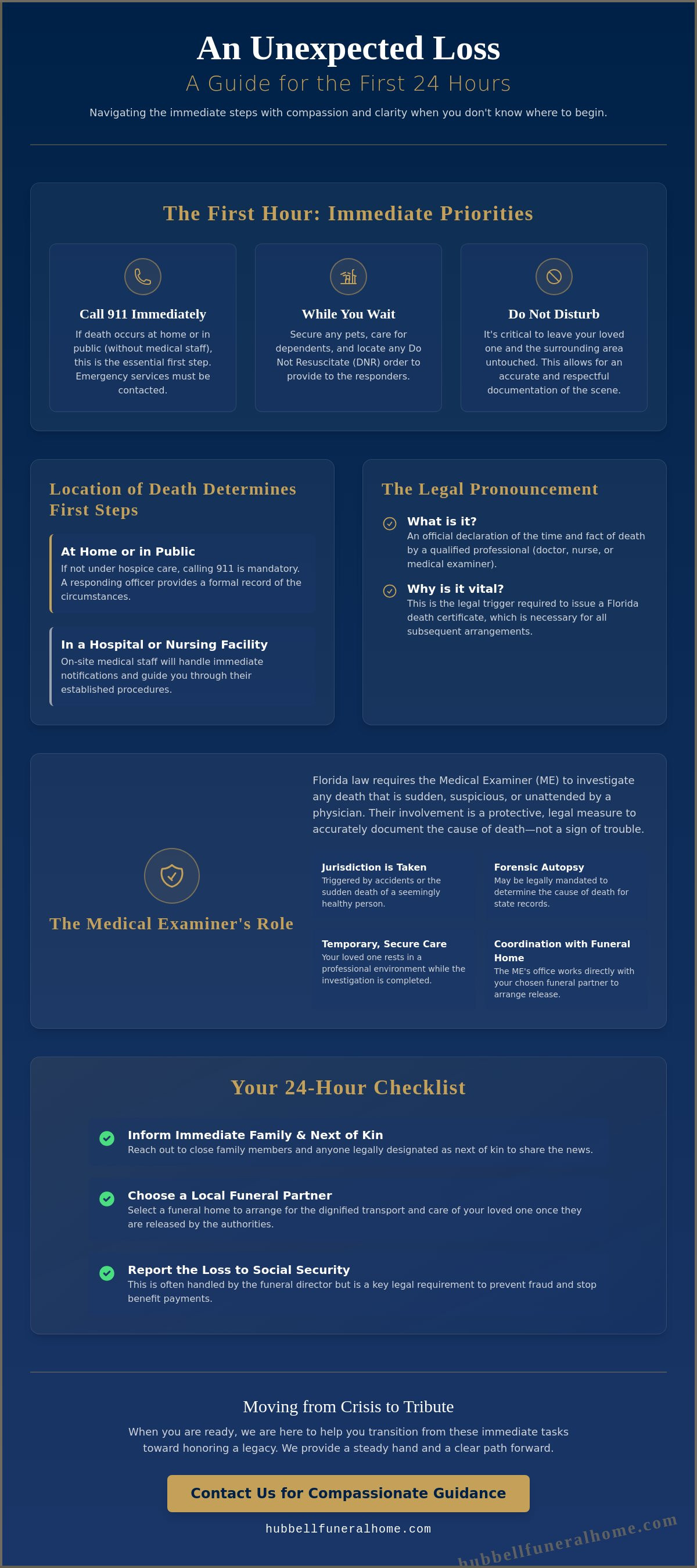
The moment you realize a loved one has passed away suddenly, your world stops. It's a heavy, confusing time, and you might feel a desperate need to do something, yet not know where to start. When facing an unexpected death what to do first is call 911. This is the essential first step if the loss occurred at home or in a public space without medical staff present. While it feels urgent to help or move them, please try to leave the scene exactly as it is until responders arrive. This isn't just about protocol; it's about ensuring every detail is documented with the care and accuracy your loved one deserves.
As you wait, take a breath and look around. Are there pets that need a quiet space? Are there children or other dependents who need comfort or supervision? Securing the premises and ensuring everyone’s immediate safety provides a small sense of order in the middle of the shock. If you know of a Do Not Resuscitate (DNR) order, have it ready for the emergency team. This ensures the responders can honor your loved one's specific wishes from the very beginning of the grieving process.
Who to Call Based on the Location of Death
Where the death occurs dictates your first phone call. If your loved one was in a hospital or a nursing facility, the on-site staff will guide you through the initial steps and handle the immediate notifications. However, for a death at a private residence that wasn't under hospice care, 911 is mandatory. A responding officer will arrive to document the scene. They aren't there to be intrusive; their role is to provide a formal record of the circumstances. This protects the integrity of the legal process and provides clarity for the family later on during this unexpected death what to do first phase.
The Legal Pronouncement of Death
Before any other arrangements can begin, a legal pronouncement must occur. This is when a qualified professional, such as a doctor, nurse, or medical examiner, officially declares the time and fact of death. Why is this so vital? This declaration is the trigger for the issuance of the Florida death certificate. Without it, the logistical journey of honoring a legacy cannot move forward. Legal pronouncement is the mandatory validation required for all end-of-life logistics. Once this step is complete, the focus can slowly shift from the immediate crisis toward the more personal aspects of farewell and tribute.
Understanding the Florida Medical Examiner’s Role in Unexpected Deaths
When you're facing an unexpected death what to do first often involves understanding why authorities may take your loved one to a specialized facility. It's a moment that can feel cold and clinical, but it's important to realize that Florida law requires the Medical Examiner to investigate any loss that is sudden, suspicious, or unattended by a physician. In our local community, the District 6 Medical Examiner serves Belleair Bluffs and the greater Pinellas County area. Their involvement isn't a sign of trouble; it's a protective measure to ensure the cause of death is accurately and legally documented.
The Medical Examiner’s facility provides a temporary, secure location for your loved one while these questions are answered. While it's difficult to be separated during such an emotional time, knowing they're in a professional environment can offer a small measure of peace. Following the Immediate Steps After a Death, the ME will determine the level of investigation needed to satisfy state requirements. If you feel overwhelmed by these logistics, reaching out to a trusted funeral partner can help bridge the gap between the investigation and your personal farewell.
Why the Medical Examiner Takes Jurisdiction
Why does the ME get involved in some cases but not others? Jurisdiction is typically triggered by accidents, the sudden death of a healthy individual, or deaths where a person wasn't under the recent care of a doctor. It's vital to understand the difference between a forensic autopsy, which is mandated by the state to determine a cause for legal records, and a private medical autopsy. Even if it contradicts family traditions or personal wishes, a forensic autopsy may be required by law. The ME’s office coordinates directly with your chosen funeral home to arrange for the eventual release of your loved one once their work is finished.
Navigating the Investigation Period
How long does this process usually take? In Pinellas County, the release of remains often occurs within 24 to 48 hours, though complex cases or those involving specialized testing can take longer. Families can usually obtain preliminary findings by contacting the ME’s office directly, providing a bit of clarity during a confusing time. We encourage you to practice patience during this critical legal phase. This thoroughness ensures that all documentation is correct, which is the foundation for everything from life insurance claims to the final celebration of a legacy.
Choosing a Local Funeral Partner for Dignified Care and Transport
Once the legal requirements are underway, deciding on an unexpected death what to do first involves selecting a funeral home that will act as your advocate. You're looking for more than just a service provider; you're looking for a partner who offers both traditional and modern care options, such as Water Cremation or Life Celebration Services. It's essential to verify that the facility can coordinate directly with the Medical Examiner's office. This coordination ensures a seamless transition for your loved one, sparing you from having to navigate the minutiae of release forms and transport schedules during your time of distress.
Look for a facility that provides clear, upfront guidance. In the wake of a sudden loss, the last thing you need is a high-pressure sales environment. A dignified provider will focus on your needs and the legacy of your loved one rather than pushing specific packages. By choosing a family-owned home that understands Belleair Bluffs community values, you ensure that the care provided is neighborly and respectful, reflecting the unique spirit of our local area.
Arranging for Professional Transportation
The funeral home handles the transfer from the morgue or hospital once the legal release is granted. This initial transport, often called the "removal," is handled with the highest level of reverence. It's the first step in bringing your loved one into a space of quiet care. If your loved one was visiting Florida from another part of the country, your funeral partner can also facilitate a transfer to another state. This specialized service requires specific permits and coordination with out-of-state directors, all of which a professional partner manages on your behalf.
The Importance of Heritage and Trust
When considering an unexpected death what to do first, the value of local heritage cannot be overstated. The 60-year history of Hubbell Funeral Home and Crematory in Pinellas County provides a steady hand that corporate-owned chains simply can't replicate. While corporate facilities may answer to distant shareholders, a local family-operated home answers to the community. A local partner is better equipped to handle Pinellas County logistics because they maintain long-standing, direct relationships with our District 6 Medical Examiner and local health departments. This deep-rooted expertise allows them to manage the small details so you can focus on the significance of the life lived.
The First 24 Hours: Essential Notifications and Legal Documentation
Once the immediate shock of the first hour begins to settle, you enter a period where logistics demand your attention. When you're managing an unexpected death what to do first within the 24-hour mark is to start an organized list of essential notifications. This isn't just about checking boxes on a legal form; it's about ensuring that the people who shared in your loved one's life hear the news with the dignity and care they deserve. While it feels like a mountain of paperwork, taking these steps early helps prevent confusion and protects your loved one's estate from the very beginning.
Your next calls should include the Social Security Administration and the deceased's employer. While many funeral directors will notify Social Security as part of their service, it's always wise to confirm this has been done to prevent any overpayments or complications with benefits. Contacting the employer is equally vital. You'll need to discuss the cessation of paychecks and inquire about any immediate life insurance policies or death benefits that might be tied to their employment. During this time, try to locate essential documents like a Will, life insurance policies, and, if they served our country, their Military Discharge papers (DD-214).
A practical step that many families overlook is the volume of documentation required for the weeks ahead. We recommend ordering multiple copies of the death certificate, usually between 10 and 15. You'll find that banks, insurance companies, and government agencies often require an original certified copy rather than a photocopy. Having these on hand early in the process saves you the stress of repeated trips to the health department later on.
Who to Notify Immediately
Start with the inner circle of family and the designated next of kin. To protect your own emotional energy, don't feel obligated to make every call yourself. You can use a "phone tree" or ask a trusted friend to spread the news to wider social circles. If your loved one was a veteran, it's important to reach out to local organizations like the American Legion Seminole Florida. These groups offer specialized support and can help you understand the honors your loved one earned through their service.
Securing the Legacy and Estate
If a named executor exists, their responsibilities begin almost immediately. They should ensure the home and any personal property are secure, especially if the residence will be unoccupied. Protecting the estate from theft or simple damage is a quiet but vital way to honor their memory. You can also begin the process of finding and honoring local legacies by reviewing local records to see how others have shared their stories. If this administrative weight feels too heavy, you can contact our steady advisors to help you navigate these first essential steps with clarity.
Moving from Crisis to Tribute: Personalized Life Celebrations
After you have addressed the urgent logistics of an unexpected death what to do first, a new phase of the journey begins. The focus shifts from the weight of legal requirements to the warmth of personal memories. This transition is where healing starts to take root. How do you want your loved one to be remembered? By moving away from the clinical nature of the first 24 hours, you can begin to design a service that truly reflects their unique personality and the heritage they leave behind. It’s about honoring a life, not just marking a passing.
The initial shock often leaves families feeling rushed, but there's no need to hurry through the creative process of a tribute. You have the space to consider what truly mattered to your loved one. Whether it was their quiet strength, their vibrant humor, or their deep connection to the local community, these traits should be the foundation of the service. This shift in focus helps alleviate the emotional burden, allowing the family to gather around a shared story rather than a shared crisis.
Exploring Gentle Farewell Options
Many modern families are looking for alternatives that feel more aligned with their values. Have you considered water cremation? This process, also known as alkaline hydrolysis, uses water and temperature to return a loved one to the earth in a way that is significantly more eco-friendly than traditional methods. It’s a quiet, dignified choice for those who lived with a deep respect for the environment. Whether you choose this or a more traditional path, navigating end-of-life care decisions requires a partner who listens with empathy and respects your pace. We believe every family deserves to understand all their options without pressure, and the team at Hubbell Funeral Home and Crematory is here to provide that clarity.
Creating a Lasting Tribute
A meaningful farewell often involves tangible elements that tell a story. You might select a custom casket, a beautiful urn, or even keepsake jewelry that allows you to carry a piece of their legacy with you every day. These items aren't just merchandise; they are vessels for memory. For our veterans, incorporating specialized honors ensures their service to our country is recognized with the reverence it deserves. This might include a flag folding ceremony or the playing of Taps, providing a final, dignified salute to their contribution.
Storytelling is the heart of this process; it allows friends and family to share the small, personal details that made a life significant. Was there a favorite song? A specific hobby that defined their weekends? A Life Celebration is a service focused on the joy of a legacy rather than the sorrow of loss. By focusing on the life lived, you create a space where the community can gather to support one another and begin the long journey of healing together. This shift in perspective helps move the heart from the trauma of the first 24 hours toward a place of lasting peace and reverence.
Building a Path Toward Healing
The journey through the first 24 hours of a sudden loss is one of the most challenging experiences a family can face. By following the structured steps we've discussed, from making those first critical calls to understanding the legal role of the medical examiner, you've already begun to reclaim a sense of order. You now have the tools to manage the essential notifications and documentation needed to protect your loved one's estate while preparing for a meaningful tribute that honors their unique life.
When you're trying to determine an unexpected death what to do first, remember that you don't have to navigate these complexities in isolation. As a family-owned pillar of our community since 1963, Hubbell Funeral Home and Crematory provides the steady guidance and local expertise required to handle every detail with dignity. Whether you're interested in our gentle water cremation options or require specialized Veteran Funeral Honors, our team is here to support your family's unique needs with straightforward empathy and professional care.
Contact Hubbell Funeral Home and Crematory for immediate, compassionate assistance.
Take this process one step at a time; your strength is found in your love for them, and we're here to walk beside you every step of the way.
Frequently Asked Questions
What is the very first thing I should do if someone dies unexpectedly at home?
Call 911 immediately to ensure that emergency responders and a legal authority can provide a formal pronouncement of death. This is the essential first step when facing an unexpected death what to do first at a private residence. They'll guide you through the initial documentation and notify the medical examiner's office if necessary. Try to keep the area undisturbed until the professionals arrive to help you through these first quiet moments.
Do I have to call the police for an unexpected death in Florida?
Yes, Florida law requires that any death not attended by a physician be reported to the authorities. When you call 911, local police and medical responders will arrive to document the situation and provide a legal record. This isn't an accusation of wrongdoing; it's a necessary step to protect your loved one’s legacy and ensure all state regulations are followed with the respect they deserve during a difficult time.
What happens if the Medical Examiner takes my loved one?
Your loved one will be moved to the District 6 Medical Examiner’s facility in Pinellas County for a professional investigation into the cause of death. During this time, they're in safe, respectful hands while the state fulfills its legal obligations. Once the investigation is complete, your chosen funeral home will coordinate the transfer. They'll handle the logistics so you can focus on your family and the journey of remembrance.
How long does it take to get a death certificate in Pinellas County?
In Pinellas County, it typically takes between five and ten business days to receive certified copies of the death certificate after the cause of death is finalized. The funeral home you partner with will usually handle the ordering process for you. Because many agencies require original certificates, we recommend requesting several copies early on to help manage the estate and insurance requirements without unnecessary delays or added stress.
Can I choose any funeral home if the death was unexpected?
You have the absolute legal right to select any licensed funeral home that aligns with your family’s values and needs. Even if the state must investigate an unexpected death what to do first, the choice of who provides the final care remains with the next of kin. Choosing a local, family-owned partner ensures that your loved one is treated as a neighbor, not just a case number, throughout the entire process.
What if my loved one wanted to be an organ donor but died unexpectedly?
You should notify the 911 dispatcher or the responding officers immediately if you know your loved one wished to be an organ donor. Time is an incredibly sensitive factor in successful donation; therefore, early notification is vital. The medical examiner’s office will work alongside organ procurement organizations to see if the donation can proceed while still respecting the needs of the legal investigation and your family’s personal wishes.
Who pays for the transportation of the body to the funeral home?
The county generally covers the cost of transporting a body to the Medical Examiner’s office for a mandatory investigation. However, the family or the estate is responsible for the professional transportation from the morgue or hospital to the funeral home. Your funeral director will clearly explain these fees upfront. They'll ensure the transfer is handled with dignity, reflecting the deep respect we hold for every member of our community.
How do I stop Social Security payments for a deceased relative?
Most funeral homes provide the service of notifying the Social Security Administration on your behalf. It's a helpful way to reduce your administrative burden during a crisis. If you need to handle it personally, you can call their national office or visit a local Pinellas County branch. Prompt notification is important to ensure that payments stop correctly and to prevent any future financial complications for the estate or the survivors.