What if your final act of love wasn't just a goodbye, but a restorative gift to the Florida coastlines you've always cherished? Many families today feel a quiet weight when considering end-of-life choices. You might worry about the high carbon footprint of flame cremation or the limited cemetery land available in our beautiful state. It's natural to seek a path that honors a life lived while protecting the local environment we call home.
We understand these concerns, and we're here to help you find peace of mind. In this article, you'll discover the specific benefits of aquamation for the environment and how this flameless alternative preserves Florida's natural beauty for future generations. It's a choice that feels as gentle as the water itself, offering a dignified way to say farewell without leaving a lasting burden on the planet.
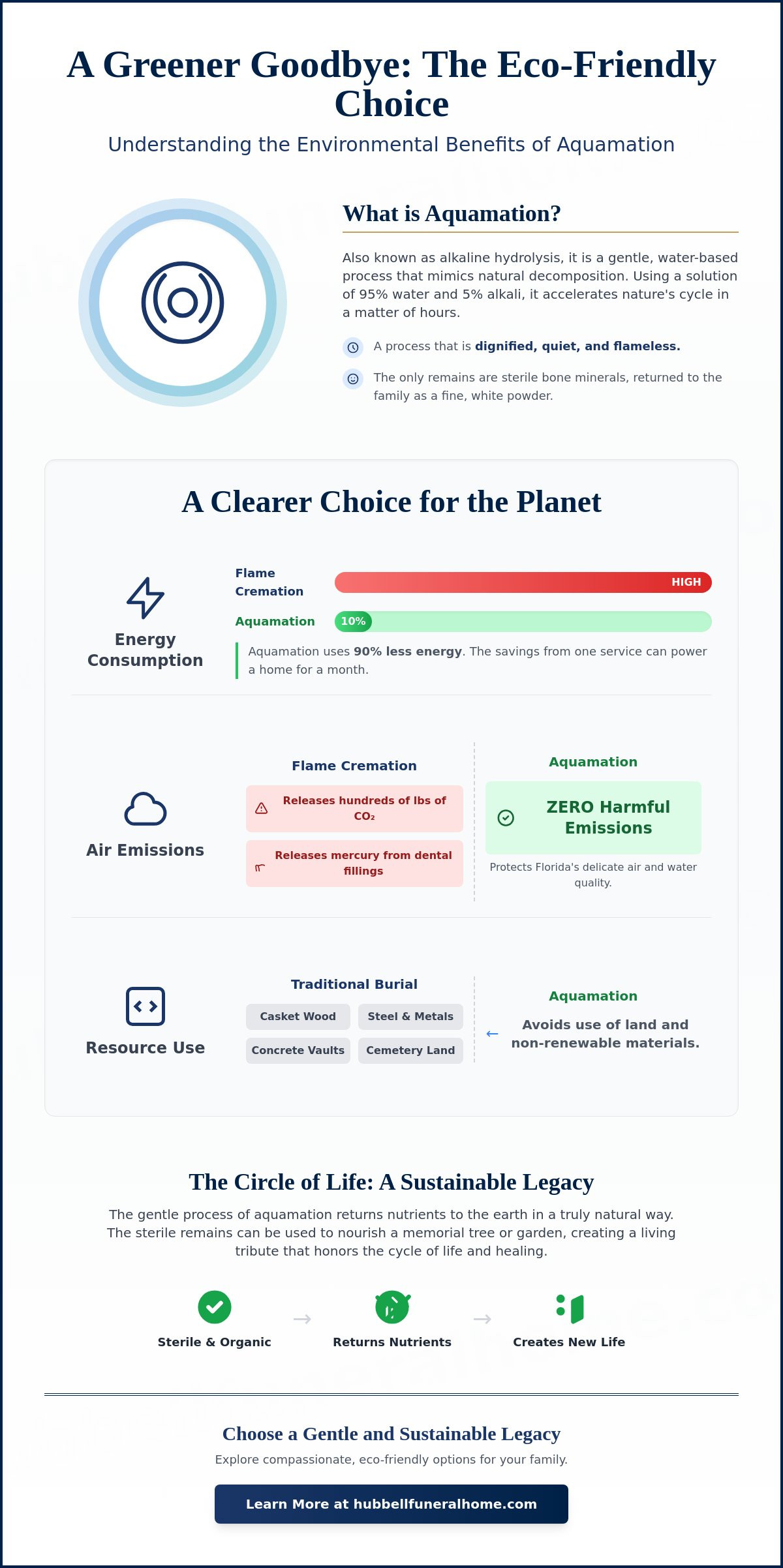
We'll look at how this process uses 90% less energy than traditional methods and eliminates harmful mercury emissions entirely. You'll learn why water cremation is a truly natural way to return to the earth, ensuring your legacy is one of healing and sustainability. Let's explore how a simpler, water-based journey can provide the quiet comfort and environmental protection your family deserves.
Key Takeaways
- Understand how water cremation uses a gentle, flameless process to mimic the natural cycle of returning to the earth.
- Discover how the benefits of aquamation for the environment include using up to 90% less energy while eliminating the use of fossil fuels.
- See how choosing this method protects Florida’s delicate coastal air and water quality by completely eliminating harmful mercury emissions.
- Explore how the sterile, organic remains allow for a sustainable legacy that honors the natural "Circle of Life."
- Learn how these eco-friendly choices can be woven into a personalized Life Celebration service that celebrates a unique history and heritage.
What is Aquamation and Why is it the Greenest Choice?
In the quiet neighborhoods of Belleair Bluffs and across Pinellas County, a shift is happening. Families are looking for ways to honor their loved ones that also honor the land we call home. Traditional methods often carry a heavy environmental weight that doesn't always sit right with those who spent their lives enjoying Florida's natural beauty. You might be searching for something that feels more in harmony with our coastal surroundings. That's why many are turning to a process that is as gentle as it is effective.
What is Aquamation exactly? It's a gentle, water-based process officially known as alkaline hydrolysis. Instead of using high-intensity flames, it uses a solution of 95% water and 5% alkali to mimic the natural decomposition that occurs when a body is laid to rest in the earth. The biggest difference is that it completes this journey in a matter of hours rather than years. It's a choice that reflects a deep respect for both the individual and the ecosystem. One of the primary benefits of aquamation for the environment is its minimal impact on our local air and soil. It doesn't rely on fossil fuels and doesn't release harmful greenhouse gases into our Florida sky.
The Science of Alkaline Hydrolysis
How does the process actually work? It breaks down organic matter into its most basic building blocks, such as amino acids, peptides, and salts. By the end of the cycle, no DNA or soft tissue remains. What is left are the sterile bone minerals, which are carefully returned to the family as a fine, white powder. Alkaline hydrolysis acts as a natural catalyst for decomposition. This scientific approach ensures a clean, efficient, and profoundly respectful transition that leaves nothing harmful behind.
A Flameless Return to Nature
For many families, the thought of fire can feel harsh or aggressive during a time of loss. Water, by contrast, suggests a sense of peace, renewal, and calm. This flameless return to nature allows a loved one to transition in a way that protects the soil and water we all share. It aligns perfectly with the growing preference for water cremation as a modern legacy. By choosing this path, you're ensuring that the final footprint left behind is as light as possible. It’s a quiet act of stewardship that preserves the beauty of our local beaches and parks for the next generation. It’s about returning to the earth with the same kindness we hope to show one another every day.
Comparing the Carbon Footprint: Water vs. Flame
Choosing a final path often involves weighing emotional needs against a desire to leave the world better than we found it. For many families in Belleair Bluffs, the environmental cost of traditional methods is a growing concern. When we look at the data, the contrast between water and fire becomes clear. It's not just about the process itself, but about the legacy left behind in the air we breathe and the soil we walk upon. By understanding the benefits of aquamation for the environment, families can feel confident that their choice supports the health of our local Florida ecosystem.
Traditional burial carries a significant footprint that often goes unseen. Every year, burials in the U.S. use millions of board feet of hardwood and thousands of tons of steel for caskets. When you add in the concrete for burial vaults and the pesticides used to maintain cemetery lawns, the environmental toll adds up quickly. Exploring the benefits of aquamation for the environment provides a way to sidestep these heavy industrial requirements in favor of a simpler, more natural return.
Drastic Reduction in Energy Use
How much energy does it take to say goodbye? Flame cremation requires a retort to reach intense temperatures between 1,400 and 1,800 degrees Fahrenheit. This consumes a vast amount of natural gas to maintain that heat for several hours. Aquamation, by contrast, uses roughly 90% less energy because it operates at much lower temperatures. To put that in perspective, the energy saved by choosing water over flame is roughly equivalent to the electricity a typical household uses in an entire month. This smaller energy demand makes it a much more sustainable choice for our local community.
Eliminating Greenhouse Gas Emissions
The most visible difference is in what is released into the atmosphere. A single flame cremation can release hundreds of pounds of carbon dioxide into the Florida sky. It also releases mercury from dental amalgams, which can eventually settle into our local waterways and affect our coastal wildlife. Aquamation produces zero direct emissions of CO2 or mercury. It's a clean, contained process that avoids the smoke and high-carbon output of traditional burning. Industry experts at the Cremation Association of North America recognize this method as The Greenest Choice for modern families. If you're looking for a way to honor a life while protecting our local ecosystem, the advisors at Hubbell Funeral Home and Crematory can help you explore these gentle, flameless options.
Protecting Florida’s Air and Water Quality
Living in coastal communities like Belleair Bluffs and Largo means sharing a deep bond with the Gulf. We see the tides change every day and understand how delicate our local environment truly is. When we make decisions about the future, we want to ensure that our legacy doesn't harm the air we breathe or the water that sustains our wildlife. One of the most significant benefits of aquamation for the environment is how it actively shields these precious resources from the pollutants associated with more traditional methods. It’s a choice that reflects a commitment to the health of our neighbors and the beauty of our shared landscape.
Mercury and Heavy Metal Sequestration
Did you know that flame cremation can unintentionally impact our air quality? When a body is cremated with fire, mercury from dental fillings is vaporized. This mercury is then released directly into the atmosphere, where it can eventually settle into our soil and water. This is a significant concern for our Pinellas County ecosystem. Aquamation handles this challenge with much more care. Because the process uses gentle water flow rather than high heat, heavy metals like mercury remain completely intact. They don't turn into gas. Instead, we can safely remove and recycle these materials once the process is complete. This ensures that harmful toxins never reach the air we breathe, providing a cleaner, safer environment for everyone in the Belleair Bluffs area.
Preserving Florida’s Fragile Water Table
Our state is famous for its lush beauty, but our high water table presents unique challenges for traditional burial. In many parts of Florida, the groundwater is just a few feet below the surface. Traditional burials often involve embalming fluids and other chemicals that can eventually leach into the soil and reach our water supply. Why take that risk? Water cremation is a safer choice because it produces a sterile, organic liquid that contains no harmful chemicals. This liquid is safely returned to the municipal water system, mirroring the natural cycles of renewal. At Hubbell Funeral Home and Crematory, we see ourselves as your neighbors first. We believe that protecting our local land is a vital part of being a trusted community partner. By choosing a sustainable path, you’re helping to preserve the natural splendor of Florida for the grandchildren who will one day walk these same shores. It’s about ensuring that the Florida they inherit is just as vibrant and healthy as the one we enjoy today.
The Circle of Life: Returning Nutrients to the Earth
The journey of remembrance doesn't have to end with a footprint of waste. Instead, it can become a beautiful cycle of renewal. One of the most profound benefits of aquamation for the environment is how it transforms the final transition into a restorative act for the earth. While traditional burial often seals remains away in non-biodegradable containers, water cremation allows the basic building blocks of life to return to the natural world in a clean, constructive way. It’s a choice that reflects the quiet wisdom of the seasons, ensuring that a legacy of love continues to nourish the world left behind.
We often hear questions about what happens to the water used in the process. It's a natural concern for our Belleair Bluffs neighbors. Some worry about the idea of remains being handled through municipal systems, but the reality is deeply rooted in science and safety. By the end of the aquamation cycle, the process produces a sterile, organic liquid known as effluent. This liquid is completely free of pathogens or DNA. It is a sterile, soap-like organic solution. Because it is 100% clean, it can be safely returned to the ecosystem, where it rejoins the water cycle that sustains our Florida landscape.
A Resource, Not a Waste
This effluent isn't just safe; it’s actually beneficial. It contains a rich concentration of nutrients like amino acids, peptides, and salts. These are the very same elements that plants need to thrive. In many conservation-minded communities, this liquid is used in "green" memorials or local reforestation efforts to help new life grow. Instead of introducing harsh chemicals or heavy metals into our soil, you’re providing the earth with the organic matter it needs. It turns the final farewell into a quiet gift to the local flora of Pinellas County.
Eco-Friendly Memorialization Options
The physical remains returned to your family also offer sustainable ways to hold onto memories. Families often choose to place the fine, white bone minerals into keepsake jewelry, allowing a piece of their loved one’s legacy to stay close to their heart. Another tactile, earth-friendly option is the creation of "parting stones." These are smooth, stone-like remains that can be held in your hand or placed in a garden. These choices reduce the need for large, permanent cemetery monuments that require constant land maintenance and resources. If you’re interested in a final tribute that honors both your loved one and the earth, reach out to Hubbell Funeral Home and Crematory to discuss our sustainable service options. We’re here to help you create a legacy that truly reflects the values of your family.
Choosing a Sustainable Legacy at Hubbell Funeral Home
Since 1963, Hubbell Funeral Home has served the Belleair Bluffs community as a steady hand during life’s most difficult chapters. We believe every life carries a unique story, and choosing a final path is a deeply personal part of that narrative. By embracing the benefits of aquamation for the environment, we provide a way for families to align their final farewell with the values they held in life. Our role as your trusted advisor is to manage every detail with humble expertise, so you can focus on what truly matters: healing and remembrance. We’re here to ensure that your choice reflects a lifelong respect for the Florida land we all share.
Our long-standing heritage in Pinellas County gives us a deep understanding of the local environment. We know that many families today feel a sense of responsibility toward our coastlines and water table. That’s why we’ve integrated water cremation into our service offerings. It’s not just about the mechanics of the process; it’s about providing a compassionate alternative that feels right for the modern era. We guide you through each step with the same patient, detail-oriented care that has defined our family-owned business for generations.
Personalized Eco-Friendly Tributes
Choosing a sustainable option doesn't mean you have to forgo a meaningful ceremony. Water cremation integrates seamlessly into our personalized Life Celebration services. You can still hold a traditional visitation, a formal funeral service, or a gathering with sympathy flowers and music. We take great pride in offering specialized veteran funeral honors for those who served, ensuring every detail is handled with the highest level of dignity. Whether you prefer a quiet graveside service or a vibrant memorial, we ensure the process remains respectful and centered on your family’s history. The benefits of aquamation for the environment simply mean that your tribute is as kind to the earth as it is to the memory of your loved one.
Taking the First Step Toward a Greener Future
It’s never too early to consider how you want to be remembered. Many neighbors find peace of mind by exploring pre-planning services to lock in their green values today. If you already have a traditional plan in place, switching to a water cremation plan is a simple and low-pressure process. We’re here to walk you through the options at your own pace, ensuring you feel supported and never rushed. We invite you to speak with one of our compassionate advisors to learn more about how we can help you create a sustainable legacy. Contact Hubbell Funeral Home to discuss your eco-friendly options.
Embracing a Legacy of Healing for Florida’s Future
Choosing how we are remembered is a final, profound act of stewardship. We've explored how water cremation offers a path that honors both the individual and the delicate Florida ecosystem. From reducing energy use by 90% to protecting our local water table from harmful toxins, the benefits of aquamation for the environment are clear and lasting. It’s a gentle way to return to the earth, ensuring your legacy is one of restoration rather than a burden. This choice reflects a deep respect for the land we call home.
As pioneers in Florida water cremation services, Hubbell Funeral Home has been a steady presence in Belleair Bluffs since 1963. Our family-owned approach ensures that every member of your household, including your cherished pets, receives dignified and compassionate care. We’re here to manage the details with a steady hand, allowing you to focus on the significance of the life lived and the stories that define it.
Are you ready to align your final wishes with your love for the natural world? You can begin your eco-friendly pre-planning journey with Hubbell Funeral Home today. Let’s work together to preserve the beauty of our local community for all the generations yet to come.
Frequently Asked Questions
Is aquamation legal in the state of Florida for 2026?
Yes, aquamation is fully legal and authorized in the state of Florida. It falls under Florida Statutes § 497.005, which defines cremation to include chemical and water-based processes. Our state was one of the first in the country to recognize this gentle method, giving local families a legal and sustainable choice for many years.
Does water cremation produce any toxic waste or harmful byproducts?
No, the process doesn't create any toxic waste. The only byproducts are sterile bone minerals and a clean, organic liquid consisting of amino acids, salts, and peptides. One of the primary benefits of aquamation for the environment is that it completely avoids the release of mercury vapor, which is a common concern with traditional flame-based methods.
How does the cost of aquamation compare to traditional flame cremation?
Aquamation is generally priced slightly higher than traditional flame cremation. This is because the specialized equipment and advanced technology required for the water-based process involve higher initial costs for the provider. Many families find the extra investment worthwhile for the gentle nature of the service and its significantly lower impact on our local Florida ecosystem.
Can I still have a memorial service if I choose water cremation?
Absolutely. You can choose from our full range of Life Celebration services or memorial services when you select water cremation. The process is simply the method of final disposition; it doesn't limit your ability to gather with friends and family, display sympathy flowers, or share meaningful stories to honor your loved one's legacy.
What happens to the water after the aquamation process is complete?
The resulting liquid is a sterile, pathogen-free effluent that is safely returned to the municipal water system. It contains no DNA and is essentially a soap-like organic solution. This is a vital part of the benefits of aquamation for the environment, as it allows the basic building blocks of life to rejoin the natural water cycle in a clean and safe way.
Is aquamation really 90% more energy-efficient than fire?
Yes, this is a verified statistic. Because the process relies on water and gentle heat rather than intense, sustained flames, it uses about one-eighth of the energy required for a traditional retort. This drastic reduction in energy consumption makes it the most sustainable choice available for families who want to minimize their final carbon footprint.
Are the remains from water cremation different from flame ashes?
Yes, the remains are noticeably different in both appearance and volume. Families typically receive about 20% to 30% more remains back compared to flame cremation. The final minerals are a soft, fine, white powder, whereas remains from fire are often coarser and gray in color due to the carbonization process.
Can aquamation be used for veterans receiving military honors?
Yes, veterans who choose water cremation are entitled to the same full military honors as any other service. Choosing an eco-friendly path doesn't change the recognition or respect earned through service to our country. We take great pride in coordinating these specialized honors to ensure every veteran is treated with the highest level of dignity and care.