

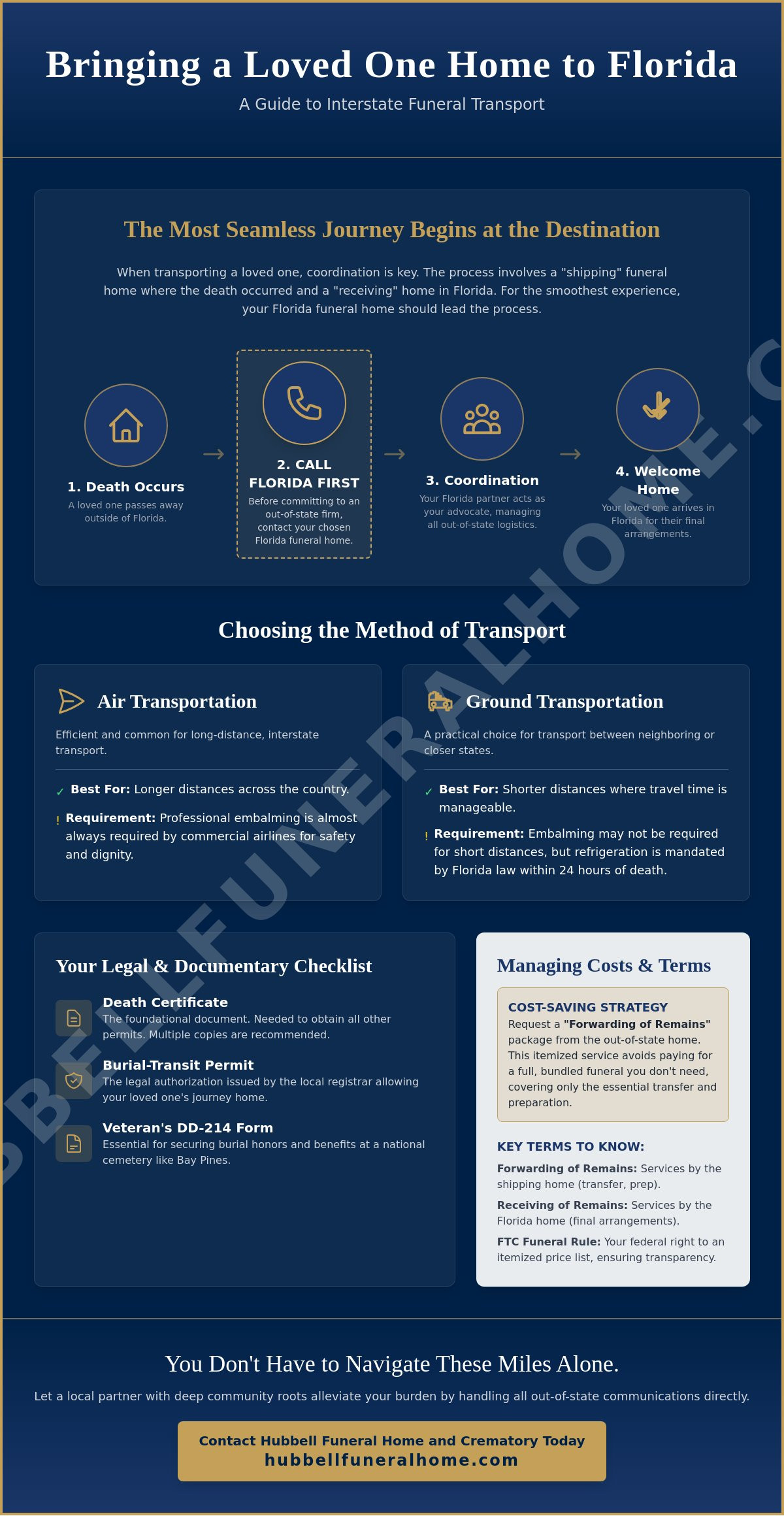
You might think the funeral home in the city where your loved one passed away should lead the logistics, but the most seamless journey actually begins at the destination. When you're grieving, the thought of managing interstate death laws and specialized transportation feels like an impossible weight. You want to focus on honoring a life, not deciphering shipping permits or worrying about whether a flight delay will disrupt the service. It's completely natural to feel overwhelmed by the complexity of transporting a loved one to Florida for burial, especially when you're already carrying the burden of loss.
This guide will help you understand the essential steps of this process, ensuring you have the clarity needed to bring your loved one home with dignity. We'll walk through the legal requirements, explore cost-effective transport options, and explain how a local Florida partner can manage the heavy lifting for you. By breaking down the financial and logistical steps into a clear, manageable checklist, we hope to provide a steady hand during this difficult time. You don't have to navigate these miles alone; we're here to help you bridge the distance with care and respect.
Key Takeaways
- Understand the "two-home" system and why the receiving funeral home in Florida should ideally lead the coordination.
- Identify the essential legal documents, such as the Burial-Transit Permit, required for transporting a loved one to Florida for burial.
- Compare ground and air transportation options to determine the most efficient route based on distance and timing.
- Learn how to manage expenses by requesting specialized "Forwarding of Remains" packages from the shipping funeral home.
- Discover how a local partner with deep community roots can alleviate your burden by handling all out-of-state communications directly.
Understanding the Process of Interstate Funeral Shipping
Bringing a family member back to their roots is a sacred task. When you're transporting a loved one to Florida for burial, the process involves a specific partnership known as the "two-home system." This arrangement requires a shipping funeral home in the state where the death occurred and a receiving funeral home here in Florida. While this sounds like a heavy logistical burden, it's a path many families choose to honor a lifelong legacy. For many, Florida isn't just a place on a map; it's where they spent their happiest years or where generations of family already rest. Returning to a family plot or a favorite coastal town offers a sense of closure that only "coming home" can provide.
Although you may feel pressured to make decisions within hours of a loss, it's vital to take a breath. Immediate action is necessary due to state regulations regarding refrigeration and preparation, but signing a contract with an out-of-state provider before speaking to your Florida partner can lead to unnecessary expenses. At Hubbell Funeral Home and Crematory, we've spent 60 years acting as a steady mentor for families in Belleair Bluffs and the greater Pinellas County area. We manage the dialogue between these two homes so you can focus on your family's emotional needs rather than paperwork.
The First Steps When Death Occurs Out-of-State
If a death occurs in a hospital or hospice, the facility staff will ask which funeral home you've chosen. Before you commit to a local firm, call us. We recommend contacting Hubbell Funeral Home and Crematory first because we can often coordinate with an out-of-state director who understands our specific requirements. You'll simply need to tell us where your loved one is currently located and the name of the Florida cemetery where the burial will take place. This allows us to act as your advocate from the very beginning, ensuring the transition is seamless and respectful.
Common Terminology You Will Encounter
You'll hear several technical terms during this journey that might feel unfamiliar. "Forwarding of remains" refers to the services provided by the out-of-state home, including the initial transfer from the place of death and the necessary preparation. This often involves specific embalming requirements for transport, which are common for crossing state lines or meeting airline safety protocols. "Receiving of remains" is our role at Hubbell Funeral Home and Crematory. We accept the transfer from the airport or transport vehicle and coordinate the final steps, such as a traditional funeral service or a graveside service. Finally, a "transit permit" is the legal document issued by the local registrar that acts as an official authorization for your loved one's journey home. Understanding these terms helps demystify the process of transporting a loved one to Florida for burial, making a complex situation feel much more manageable.
Legal Requirements and Permits for Transporting Remains to Florida
The journey home begins with a single, vital document: the death certificate. This piece of paper is the foundation for every other permit you'll need when transporting a loved one to Florida for burial. Without it, a burial-transit permit cannot be issued. In Florida, the first certified copy of a death certificate currently costs $5.00, while additional copies are $4.00. You'll likely need several copies for insurance, banking, and the cemetery itself. Securing these promptly is the first step in ensuring the logistics of the move stay on schedule.
Florida law mandates that a body must be refrigerated or embalmed within 24 hours of death. While ground transport for short distances might occasionally allow for refrigeration, commercial airlines almost always require professional embalming. This is a practical necessity for safety and dignity during the flight. It's also important to understand your consumer rights under the FTC's Funeral Rule. This federal regulation ensures you receive an itemized price list, so you only pay for the specific transportation services you need without being forced into unnecessary bundles. Our role at Hubbell Funeral Home and Crematory is to ensure that the shipping home provides exactly what is required and nothing more.
For families of those who served, moving a veteran to a national cemetery like Bay Pines in Pinellas County requires extra care. You'll need the veteran's discharge papers, specifically the DD-214 form, to secure honors and burial benefits. If you're unsure where these documents are, we can help you navigate the request process to ensure your loved one receives the respect they earned. If you have questions about these specific requirements, you can always reach out to our staff for personalized guidance.
Florida-Specific Burial Regulations
Pinellas County health departments require the filing of a burial-transit permit before final disposition can occur. This permit is the legal passport that allows the remains to be moved from the airport or transport vehicle to the cemetery. As your receiving funeral director, we take on the responsibility of verifying that all out-of-state paperwork meets Florida's strict standards. We ensure the timeline for filing is met so there are no delays in your scheduled service, acting as the steady hand that manages these local requirements on your behalf.
Airline and TSA Regulations for Human Remains
When air travel is the chosen method, the shipping funeral home must hold "Known Shipper" status with the TSA. This is a security designation that allows them to book space on commercial flights. Additionally, airlines require specialized shipping containers. An "Air Tray" is typically used for a casketed body to protect the casket during transit. In other cases, a "Ziegler Case," which is a hermetically sealed metal container, may be required. These containers ensure the remains are handled with the highest level of security and care throughout the flight to major hubs like TPA or PIE.
Choosing the Method of Transport: Ground vs. Air
Deciding how to move your loved one isn't just about miles and minutes; it's about what feels right for your family. When transporting a loved one to Florida for burial, the distance usually dictates whether ground or air travel is the best path. For regional moves, ground transport offers a quiet, direct journey. For cross-country relocations, air transport provides the efficiency needed to keep funeral plans on schedule. Each method has its own rhythm, and we're here to help you weigh the practicalities against the personal significance of the journey.
The "dignity factor" is often a primary concern for families. Ground transport involves a private vehicle, often a specialized hearse or transport van, where your loved one is the sole focus of the driver. In contrast, air travel involves commercial cargo holds. While airlines have strict protocols for the respectful handling of human remains, some families find comfort in the continuous, single-vehicle custody that ground transport provides. We understand these feelings and will support whichever choice brings you the most peace of mind.
Logistical considerations also play a role in this decision. Weather delays can affect both methods, but they often impact air travel more significantly. Conversely, ground transport is subject to traffic conditions and vehicle maintenance needs. We monitor these variables constantly, acting as your steady advisor to ensure that any obstacles are managed before they affect your family's scheduled services.
When Ground Transport Makes Sense
Ground transport is often the most flexible option for distances under 500 miles. If your loved one is coming from a neighboring state like Georgia or Alabama, a dedicated driver can often complete the trip in a single day. This method eliminates the need for airport transfers and the rigid scheduling of flight availability. You don't have to worry about airline cargo hours or missed connections. Instead, you have the assurance of a single vehicle and a professional driver who is responsible for your loved one from the moment they leave the shipping home until they are safely in our care in Belleair Bluffs.
The Logistics of Air Mortuary Shipping
For longer distances, air transport is the standard choice. Our team is deeply familiar with the logistics of receiving remains at major Florida hubs, specifically Tampa International (TPA) and St. Pete-Clearwater (PIE). We coordinate directly with the airline's cargo department to ensure we're at the terminal the moment your loved one is ready for release. This seamless transition is vital for maintaining the timeline of your life celebration services. We handle the "receiving of remains" from the airport with the highest level of reverence, ensuring that transporting a loved one to Florida for burial by air is a process defined by care and professionalism.
Strategies for Managing Costs and Avoiding Overpayment
Managing the financial side of a loss is never easy, especially when you're coordinating across state lines. When you're transporting a loved one to Florida for burial, the costs can quickly add up if you aren't careful. One of the most effective ways to protect your family's budget is to request a "Forwarding of Remains" package from the shipping funeral home. Instead of paying individual, a la carte fees for transfer, preparation, and paperwork, this bundled package is designed to provide the essentials at a more predictable rate. We often suggest that you let us speak with the out-of-state director on your behalf. At Hubbell Funeral Home and Crematory, we speak the same professional language as the shipping director, allowing us to negotiate these details to ensure you aren't being charged for redundant services that we'll already be handling here in Pinellas County.
Another practical consideration involves the casket. If you're using air transport, remember that airfare is frequently calculated based on weight. Shipping a heavy, high-end metal casket can significantly increase the transportation bill. In many cases, it's more cost-effective to ship the remains in a lightweight transport container and select a casket from our local inventory once they arrive. If you're feeling unsure about these choices, you can review our transparent service options to see how we can help you balance dignity with your financial goals.
The FTC Funeral Rule and Your Rights
You have federal protections that ensure transparency during this process. The FTC's Funeral Rule requires every funeral home to provide you with a General Price List (GPL). This document allows you to see exactly what you're paying for before you sign any contracts. By comparing the "Forwarding" package from the origin home and our "Receiving" package here at Hubbell Funeral Home and Crematory, you can avoid overlapping service fees. Your rights include:
- The right to buy only the goods and services you want.
- The right to a written General Price List that you can keep.
- The right to see a Casket Price List before you see the actual caskets.
We're here to act as your mentor, helping you decipher these lists so you feel confident in your decisions.
Alternative Options: Aquamation and Cremation
If a traditional burial isn't a strict requirement for your family, there are modern alternatives that simplify the journey home. Choosing water cremation, also known as aquamation, provides a gentle and eco-friendly way to return a loved one to Florida. Cremated remains are much simpler to transport; in fact, the USPS is the only legal carrier for them. This path significantly reduces the logistical complexity compared to moving a casketed body, and it makes transporting a loved one to Florida for burial much more straightforward. This allows you to focus your resources on a meaningful life celebration service once they're back in the Sunshine State.
Why Hubbell Funeral Home is Your Partner for Florida Burials
For over 60 years, Hubbell Funeral Home has served Belleair Bluffs and the greater Pinellas County area with a commitment to quiet service and humble expertise. We understand that bringing a family member home is more than a logistical task; it's the final chapter of a personal history. While many guides suggest that the funeral home at the point of origin should lead the process, we believe the receiving home is your strongest advocate. We're deeply rooted in this community and understand the specific requirements of our local cemeteries and health departments. By letting us take the lead, you ensure that every detail of transporting a loved one to Florida for burial is handled with local precision and neighborly care.
We pride ourselves on acting as a steady mentor during your time of need. Our team takes the burden off your shoulders by coordinating directly with out-of-state funeral directors. You won't have to act as a middleman between two businesses during your time of grief. Instead, we manage the permits, the transport schedules, and the legal filings. Our specialized expertise in veteran funeral honors is particularly helpful for those being interred in our local national cemeteries. We ensure that every honor earned is delivered with the dignity your loved one deserves, focusing on their legacy rather than just the mechanics of the service.
Comprehensive Care from Arrival to Interment
Our support doesn't end when your loved one arrives at the airport. We provide personalized life celebration services that are tailored to reflect a unique Florida story. Whether the final rest is in Belleair Bluffs or a neighboring cemetery in Seminole, we coordinate every aspect of the graveside service or traditional funeral. We also assist families with Pinellas County obituaries, helping you share your loved one's story with the community they called home. This holistic approach ensures that the focus remains on the significance of the life lived.
Start the Journey Home Today
The process of transporting a loved one to Florida for burial can begin the moment you call us. We're available 24/7 to start the transfer process immediately, providing compassionate guidance through every permit and logistical hurdle. You don't have to navigate these miles alone or feel rushed into expensive decisions. We're here to provide a steady hand and a patient ear as we bring your loved one back to their final rest. Contact Hubbell Funeral Home today to begin coordinating your loved one’s return to Florida with the care and reverence they deserve.
Bringing Your Loved One Home with Peace of Mind
Navigating the miles between loss and final rest requires both logistical precision and deep compassion. You now understand that while the "two-home" system involves various permits and transport decisions, having a local advocate makes all the difference. By choosing the right method of transport and utilizing bundled forwarding packages, you can honor your family's legacy without the weight of unnecessary financial or emotional stress. The process of transporting a loved one to Florida for burial is a journey of returning to roots, and it's one that deserves the utmost reverence.
Since 1963, Hubbell Funeral Home has served as a steady mentor for families in Belleair Bluffs. As a family-owned business, we specialize in both domestic and international transfers, offering everything from traditional honors to eco-friendly water cremation. We're here to manage the minutiae of interstate laws and airline requirements so you don't have to. Let us help you bring your loved one home to Florida. Contact Hubbell Funeral Home today. You've already taken the most important step by seeking clarity; let us help you finish the journey with dignity and care.
Frequently Asked Questions
How much does it typically cost to transport a body to Florida for burial?
The total cost to ship a body for burial within the United States typically ranges from $3,000 to $15,000 depending on the distance and chosen method. For shorter distances under 500 miles, ground transportation often costs between $2,000 and $3,500. Air transportation involves additional airfare fees that can range from $2,000 to $8,000. These figures don't include the receiving funeral home's service fees or final cemetery costs.
Can I transport a loved one’s body myself across state lines to Florida?
It's generally not legally feasible to transport a body yourself across state lines without a licensed funeral director. Most states require a burial-transit permit which is typically issued only to death care professionals. Additionally, commercial airlines and many state borders have strict refrigeration or preparation requirements that are difficult for families to manage independently. Relying on a professional ensures all legal and health regulations are met with respect.
Is embalming required by law to ship a body to Florida?
Embalming isn't strictly required by Florida law if the remains are refrigerated or prepared within 24 hours of death. However, it's almost always a requirement for air transportation or for crossing certain state lines by ground. If you're planning a public viewing or a traditional funeral service once you arrive, embalming ensures your loved one is presented with the highest level of dignity and care during the journey.
How long does the process of transporting a body between states usually take?
The entire process usually takes between three and seven business days from the initial call to the arrival in Florida. This timeline depends on how quickly the out-of-state health department issues the death certificate and burial-transit permit. Once the paperwork is secured, ground transport can often be completed in 24 to 48 hours, while air transport depends on airline cargo availability and flight schedules.
What is the most affordable way to bring a loved one back to Florida?
Having your loved one cremated at the place of death and then transporting the cremated remains is the most cost-effective option. Cremated remains can be legally shipped via the United States Postal Service, which eliminates the high costs of specialized mortuary shipping containers and heavy airfare. This approach allows you to focus your financial resources on a meaningful life celebration service once your loved one is back home in Pinellas County.
What documents do I need to move a body from another state to Florida?
You'll need an original certified death certificate and a burial-transit permit issued by the state where the death occurred. These documents act as the legal authorization for transporting a loved one to Florida for burial. If you're planning a burial in a national cemetery, you'll also need the veteran's discharge papers, specifically the DD-214 form, to verify eligibility for honors and interment benefits.
Can Hubbell Funeral Home help if my loved one died in another country?
Yes, we specialize in international mortuary transfers and can coordinate with consulates and international carriers to bring your loved one home. Navigating the customs and health regulations of another country is complex, but our experienced team acts as a steady mentor throughout the process. We handle the specialized paperwork and logistical hurdles so you don't have to manage these overwhelming details during your time of grief.
Do airlines allow family members to travel on the same flight as the remains?
You can often book a seat on the same commercial flight as your loved one, though you'll need to coordinate closely with the shipping funeral director. While you won't be able to see the remains during the journey as they're handled by the airline's cargo department, many families find comfort in knowing they're on the same path home. It's important to remember that cargo check-in times differ significantly from standard passenger boarding.