What if the most respectful way to return a loved one to the earth wasn't through fire or soil, but through the gentle embrace of water? When you are exploring meaningful ways to honor a life, it's natural to ask what is alkaline hydrolysis cremation and how it differs from the traditions we've always known. You might feel a bit of hesitation or even confusion at first. The idea of "water cremation" can sound technical or unfamiliar, especially when you're already carrying the emotional weight of a loss.
We believe you deserve a farewell that feels both dignified and kind. This guide will help you see that this process is simply a science-backed acceleration of nature's own path. You'll learn how it uses roughly 90% less energy than flame cremation and why it's now legal in 29 states across the country. We'll walk through the quiet, step-by-step journey of the process, ensuring you have the clarity to decide if this "greener" choice is the right way to celebrate your family's legacy.
Key Takeaways
- Understand exactly what is alkaline hydrolysis cremation by exploring how this water-based process gently returns a loved one to their essential elements.
- Learn the step-by-step science behind aquamation, a respectful journey using a solution of water and minerals to mimic nature's own path.
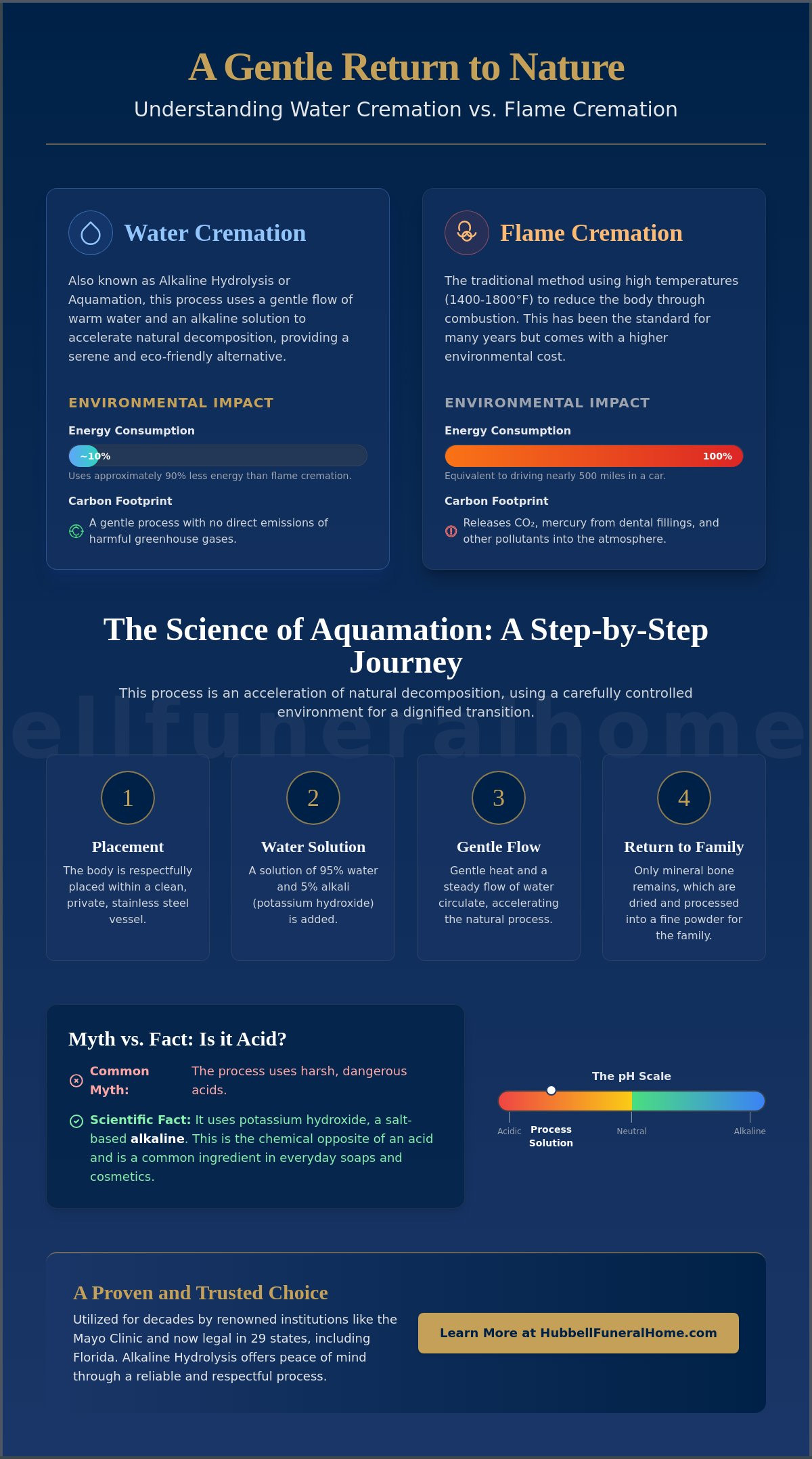
- Compare the environmental footprints to see how choosing water over flame can reduce carbon emissions and energy use by nearly 90%.
- Clear away common myths by discovering the difference between alkaline bases and acids, ensuring you feel confident in this dignified choice.
- Discover the peace of mind that comes with local, family-owned care where your loved one remains in a single, trusted location throughout the process.
Understanding Alkaline Hydrolysis: The 'Water Cremation' Alternative
Choosing a final path for a loved one is a deeply personal decision. Many families in our community are now asking, what is alkaline hydrolysis cremation? At its heart, it's a water-based process that gently reduces the body to its essential elements. You might hear it called by several names, such as Aquamation, biocremation, or green cremation. Regardless of the term used, the goal remains the same: to provide a dignified, quiet return to the earth without the use of flame.
Think of the way nature works on its own time. When we speak of Alkaline hydrolysis (also called water cremation), we are really describing an acceleration of natural decomposition. It mimics the peaceful transition that occurs over many years in a quiet, flowing stream. For many families, this framing offers a sense of relief. It moves away from the intense heat of traditional methods and toward a process that feels more in harmony with the natural cycles of life. It's a way to honor a legacy with a soft touch.
The Origins of Water-Based Cremation
While it might feel like a brand-new innovation, the roots of this technology are well-established. It originally began in the agricultural sector as a way to return nutrients to the soil. Over time, the process earned the trust of prestigious medical institutions. The Mayo Clinic, for instance, has utilized this method for decades in their donor programs because of its precision and environmental cleanliness. Today, it's a legal and respected choice in 29 states, including right here in Florida. This history provides a steady foundation of reliability for families looking for a proven, respectful alternative.
Why It Is Often Called 'The Gentle Choice'
Why do so many people describe this as the "gentle" choice? It often comes down to the elemental difference between fire and water. Traditional cremation relies on high-temperature flames, which some find to be a harsh finality for a loved one. Water, by contrast, is soft and life-giving. This transition provides a unique emotional peace, allowing families to focus on the beauty of a life lived rather than the mechanics of loss. When you are navigating end-of-life care, finding a path that aligns with your values of kindness is vital. This water-based return offers a quiet, dignified bridge between a life well-lived and a lasting memory.
The Science of Aquamation: How the Process Works Step-by-Step
Understanding the mechanical steps of a final farewell can bring a sense of order and peace during a chaotic time. When you ask what is alkaline hydrolysis cremation, you're looking for a transparent look at how we care for your loved one. The process is orderly, quiet, and deeply respectful. It relies on a simple combination of water, temperature, and timing to achieve what nature does over many years. This isn't a "chemical" dissolution in the way many fear; it's a carefully managed environment designed for a dignified transition.
The journey follows four primary steps to ensure every person is treated with the highest level of care:
- Step 1: The body is placed within a clean, stainless steel vessel. This is a private, sterile space where the individual remains throughout the entire process.
- Step 2: A solution consisting of 95% water and 5% alkaline (potassium hydroxide) is introduced into the vessel. This specific balance is what makes the process possible.
- Step 3: Gentle heat and a steady flow of water circulate within the chamber. This doesn't involve the intense, roaring heat of a flame retort; instead, it uses warmth to break down soft tissues.
- Step 4: Once the process is complete, only the mineral bone remains. These are carefully dried and processed into a fine, white powder, which is then returned to the family.
If you're beginning to think about these details for yourself or a family member, our pre-planning services can help you document these wishes in advance, taking the burden off your loved ones later.
The Role of Potassium Hydroxide
One of the most common myths we hear is that this process involves harsh acids. That simply isn't the case. We use potassium hydroxide, which is a salt-based alkaline. To put it in a more familiar context, this is the chemical opposite of an acid. It's actually a common ingredient found in everyday items like soaps and skin lotions. According to the Cremation Association of North America, this alkaline solution is completely neutralized by the end of the cycle. What remains is a sterile, DNA-free liquid that contains only organic nutrients, making it safe and eco-friendly.
What Remains: Understanding the 'Ashes'
The remains returned to families after this process are quite different from those produced by fire. Traditional cremation results in gray, gritty remains that often contain carbon fragments. With water-based care, the remains are a soft, pure white powder. Because the process is so gentle, no minerals are lost through a chimney or dispersed by high-velocity air. This means families typically receive about 20-30% more remains than they would with traditional methods. These fine remains are beautiful when placed in miniature urns or incorporated into memorial jewelry, allowing you to keep a tangible piece of a legacy close to your heart.
Water vs. Flame Cremation: Comparing the Environmental Impact
Living near the pristine waters of the Florida coast, many of our neighbors feel a deep responsibility to protect the environment. When you're exploring what is alkaline hydrolysis cremation, it's helpful to look at it through the lens of stewardship. Traditional flame cremation requires intense heat, usually fueled by natural gas, to complete the process. This energy-intensive method has been the standard for decades, but modern technology now offers a way to honor a loved one without the same environmental toll. By choosing a water-based path, you're opting for a process that doesn't rely on the burning of fossil fuels.
The difference in energy consumption is significant. Aquamation uses roughly one-eighth the energy of a traditional flame retort. Because the process avoids combustion, it eliminates the direct release of carbon dioxide and other greenhouse gases into our atmosphere. For families in Belleair Bluffs who prioritize sustainability, this "green" option is quickly becoming the preferred choice for a meaningful and responsible farewell. It's a way to ensure that a final act of remembrance is also an act of care for the world we leave behind.
The Carbon Footprint Breakdown
Choosing this method results in a 90% reduction in carbon emissions compared to traditional flame-based methods. Beyond just carbon, there's the critical issue of air quality. Flame cremation can release mercury from dental fillings into the air, a concern that has led to stricter regulations in many regions. Water cremation keeps these elements contained within the sterile liquid byproduct or the solid remains, preventing them from entering the Florida breeze. As noted by the Cremation Association of North America, this method provides a clean, sustainable path that respects both the individual and the planet.
A Choice for the Future of Florida
Opting for water cremation in Belleair Bluffs is a way to ensure that a final act is one of kindness toward the local landscape. Many families find peace knowing they're leaving a smaller footprint on the community their loved one called home. The pure, mineral remains are also perfectly compatible with eco-friendly memorial options. Whether you choose a water-soluble urn for a sea tribute or a biodegradable container for a woodland burial, the remains integrate naturally with the earth. It's a beautiful way to complete the circle of life while preserving the beauty of Florida for the generations that follow.
Addressing Common Misconceptions About 'Liquid Cremation'
When you first hear the phrase "liquid cremation," it might feel a bit unsettling. You love your family, and you want to ensure they are treated with the highest level of dignity. It's natural to worry that a water-based process might feel less respectful than the traditional methods we've known for generations. However, once you truly understand what is alkaline hydrolysis cremation, those initial fears often turn into a sense of profound peace. This is a highly regulated, professional service that takes place in a quiet, private setting. It isn't about "dissolving" a person in a harsh or clinical way. Instead, it's about using the gentle power of water to help the body return to its natural elements.
One of the most persistent myths we hear is that the body is placed in a vat of acid. This couldn't be further from the truth. As we've explored, the process uses an alkaline base, which is the chemical opposite of acid. It creates a sterile and controlled environment. Another common worry is that the water used becomes toxic or harmful. In reality, the resulting liquid is completely sterile and DNA-free. It contains only organic nutrients like amino acids, salts, and sugars. It's so clean that it can safely return to the natural water cycle, supporting the very earth that sustains us all. This process is a quiet, humble way to say goodbye that honors the individual while caring for the future of our planet.
For those who want to explore this path further, we offer Water Cremation services that prioritize both the environment and the dignity of your loved one.
Where Does the Water Go?
The liquid byproduct, often referred to as "effluent," is handled with extreme care and professional oversight. Because the process is so effective at breaking down organic matter, the liquid is essentially a sterile mixture of natural compounds. There is no DNA or specialized tissue left behind. This entire procedure is strictly overseen by state health and environmental agencies to ensure total safety for the community. Families can feel completely confident that this is a sanitary and professional procedure from start to finish. It's a clean, quiet transition that respects the sanctity of the life lived.
Religious and Cultural Perspectives
Many families wonder how their faith might view this modern choice. While every tradition is unique, many modern perspectives see water cremation as a beautiful way to honor the "return to dust" mentioned in many sacred texts. It's a choice rooted in stewardship and respect for the Earth. By protecting our natural resources, we are showing reverence for the world we were given. If you're talking to a traditionalist family member, try framing the choice as a return to nature's own path. It's a way to honor the body as a temple while ensuring that a final act is one of kindness toward the generations that follow.
Honoring a Legacy with Water Cremation in Belleair Bluffs
At Hubbell Funeral Home and Crematory, we recognize that every life in Belleair Bluffs tells a distinct story. For over sixty years, we’ve served as a steady mentor for our neighbors, evolving to offer modern care that mirrors the values of our community. When you ask what is alkaline hydrolysis cremation, you're often seeking a way to honor a loved one that feels as tranquil as our local coastline. We’ve adopted this water-based path because it aligns with our mission of providing dignified, eco-friendly care that protects the Florida landscape we all call home.
Choosing a family-owned provider ensures your loved one stays in a single, trusted location. Unlike large-scale facilities that may outsource certain steps, our on-site care means the individual never leaves our hands. This continuity offers a level of professional assurance and emotional peace that's central to our heritage. We view every person as a neighbor rather than a transaction, maintaining the same standard of reverence we’ve practiced since 1963.
This gentle method serves as a beautiful starting point for a personalized Life Celebration service. Because the remains are returned in a pure, white mineral form, they can be a meaningful focus for a gathering of family and friends. We handle the minutiae of the arrangements so you can focus on the significance of the life lived, ensuring every detail reflects the unique history of your family.
The Hubbell Family Legacy
Our presence in Pinellas County is defined by straightforward empathy and quiet service. We understand that every bond is special, which is why we provide inclusive care for household companions and specialized Veteran Funeral Honors. By offering water cremation as a part of these honors, we bridge long-standing traditions with modern sustainability. This ensures every veteran receives a tribute that's both respectful and forward-thinking, honoring their service with the highest level of care.
Taking the Next Step in Pre-Planning
Documenting your wishes today is a profound gift of support for those you leave behind. Exploring compassionate funeral pre-planning services allows you to make these decisions at your own pace, away from the pressure of a crisis. We invite you to visit us in Belleair Bluffs for a neighborly, no-pressure conversation. Let us help you manage the technical details of your final wishes, so your loved ones can focus entirely on the journey of healing and remembrance.
Choosing a Path of Kindness and Legacy
Selecting a final path is a way to reflect the values held during a lifetime. We've seen that the answer to what is alkaline hydrolysis cremation lies in its quiet, water-based transition that respects the earth as much as the individual. By choosing this modern path, you're opting for a legacy that prioritizes environmental kindness while providing your family with a soft, pure white return. It’s a transition that replaces the intensity of flame with the gentle, natural flow of water, offering a profound sense of peace for those left behind.
At Hubbell Funeral Home and Crematory, we've been a trusted part of the Belleair Bluffs community since 1963. Being family-owned and operated allows us to maintain a deeply personal approach, where your loved one stays with us in our on-site crematory from start to finish. We specialize in tailoring these eco-friendly choices into personalized life celebrations, ensuring that every detail is managed with the professional assurance you deserve. Our role is to be a steady hand, managing the minutiae so you can focus on honoring a meaningful life.
Learn more about our gentle Water Cremation services in Belleair Bluffs. We're here to act as a partner in your journey of remembrance, helping you find a path of healing that feels right for your family.
Frequently Asked Questions
Is alkaline hydrolysis legal in the state of Florida?
Yes, alkaline hydrolysis is legal and fully available in the state of Florida. Our local regulations recognize this water-based method as a dignified form of final disposition. If you're wondering what is alkaline hydrolysis cremation in terms of local oversight, it's a licensed process that meets all state health and safety standards. Families in Pinellas County can choose this path with complete confidence that they are following a lawful and respected tradition.
What happens to the water after the cremation process is finished?
The resulting liquid is a sterile, DNA-free solution of organic nutrients that is safely returned to the natural water cycle. This liquid byproduct, which contains no pathogens or harmful chemicals, is handled through local wastewater treatment systems just like other sterile fluids. It's a clean, quiet way to return a loved one to the elements. This ensures the final transition is as kind to the environment as it was to the individual during their life.
Can we still have a traditional funeral service with water cremation?
Absolutely, you can still hold a Traditional Funeral Service alongside this choice. Many families choose to have a private viewing or a formal ceremony before the water-based process begins. Alternatively, you might prefer a Cremation with Memorial Service once the remains are returned to you. This flexibility allows you to honor your loved one's legacy in a way that feels most meaningful and personal to your family's unique history.
How much does water cremation cost compared to traditional flame cremation?
Generally, the cost of water-based care is comparable to or slightly higher than traditional flame cremation. This price reflects the specialized technology and the gentle, eco-friendly nature of the equipment used. While we don't provide specific dollar amounts here, many families find the environmental benefits and the increased volume of remains to be a significant value. It's best to check with your local provider for a detailed list of their specific service options.
Are the remains from water cremation safe to touch or scatter?
Yes, the remains are completely sterile and safe to handle, touch, or scatter. They consist of pure mineral bone, which is processed into a soft, white powder after the cycle is complete. Because the process is so gentle, these remains integrate naturally with the earth or water. Whether you choose to keep them in an urn or scatter them in a favorite place, you can do so knowing they're clean and dignified.
Do I need a casket for alkaline hydrolysis?
You don't need a traditional wooden or metal casket for the alkaline hydrolysis process itself. Instead, the individual is typically placed in the vessel in a simple, biodegradable shroud or a specialized silk bag. If you're holding a viewing or a traditional service beforehand, we can discuss options for a rental casket. This approach helps reduce the environmental impact while still allowing for a respectful and beautiful ceremony for your family.
Is water cremation a 'religious' or 'secular' choice?
This is a choice that can be either religious or secular, depending on your family's personal beliefs. Many people see it as a beautiful way to honor the concept of stewardship and respect for the earth as a gift. While views vary across different faiths, many modern religious perspectives embrace it as a dignified "return to dust." It's a humble, quiet way to celebrate a life while protecting the world for future generations.
How long does the entire alkaline hydrolysis process take?
The active portion of the process typically takes between 3 to 16 hours to complete. The exact timing depends on the specific equipment used and the temperature settings selected for the transition. After the water-based cycle is finished, there's a short period for the mineral remains to be dried and prepared for the family. We'll always keep you informed of the timeline so you know exactly when your loved one will be ready to come home.